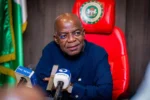
ILORIN, Nigeria — The high-profile trial of former Kwara State Governor Abdulfatah Ahmed took an unexpected turn on Thursday as a dispute over “proof of evidence” forced an early adjournment.
The case, presided over by Justice Mahmud Abdulgafar, centers on the alleged diversion of N5.78 billion in public funds—specifically Universal Basic Education Commission (UBEC) matching grants intended for school infrastructure—to pay civil service salaries and pensions.
The “Improper Pagination” Dispute
The drama began when the EFCC lead counsel, Rotimi Jacobs (SAN), attempted to tender a fresh bundle of documents as exhibits through the sixth prosecution witness (PW6), Stanley Ujilibo.
The Defense Objection: Lead defense counsel Kamaldeen Ajibade (SAN) immediately raised an objection, claiming that the documents presented in court were a “shambles.”
- Lack of Pagination: The defense argued the documents were not numbered, making it impossible to follow the proceedings or respond effectively.
- “Ambush” Tactics: Ajibade accused the EFCC of an “ambush,” stating that the bundle served on the defense differed in arrangement from the one presented to the judge.
The EFCC’s Rebuttal: Rotimi Jacobs maintained that the documents were identical to those previously served. He argued that it was not the duty of the prosecution to arrange or paginate documents for the defense team. However, in the “spirit of fairness,” the EFCC team eventually conceded to the request for better organization.
Judge’s Ruling & Adjournment
After reviewing the disputed “bundle of evidence,” Justice Mahmud Abdulgafar agreed with the defense. He ruled that the documents needed to be properly chronological and paginated to assist the court in its duty.
The judge subsequently adjourned the trial to February 16, 2026, giving the EFCC legal team time to “put their house in order.”
Witness Testimony: The SUBEB Loan
Before the proceedings stalled, the court heard testimony from the witness regarding bank statements from Polaris Bank and GTBank. These documents allegedly track how the Ahmed administration moved N1 billion from the State Universal Basic Education Board (SUBEB) account in 2015 to augment salary payments—a move the EFCC claims was illegal under the UBEC Act.