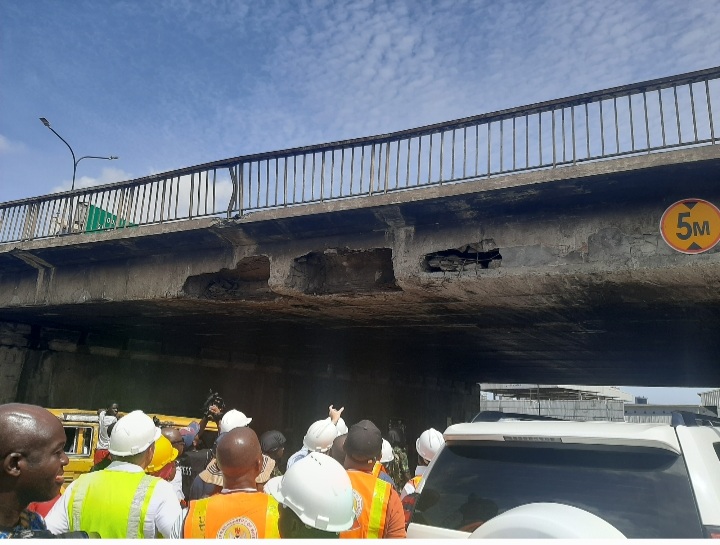
LAGOS, Nigeria — The bridge, which has suffered years of structural neglect and fire damage, will undergo a massive transformation to ensure safety and improve traffic flow between the Lagos Mainland and Island.
The Plan: Phase-Based Demolition
To minimize the impact on Lagos’ notorious traffic, the project will be executed in stages:
- The “One-Side” Strategy: Starting next week, traffic will be diverted to one carriageway while the other half is demolished and rebuilt.
- Timeline: The first half is expected to be completed by late March 2026, after which traffic will be shifted to the new side to allow the demolition of the second half.
- Project Completion: Minister Dave Umahi has set a strict deadline for June 2026.
The “Headroom” Solution
One of the most critical design changes involves raising the bridge’s clearance.
- Current Height: 4.5 metres (too low for modern logistics).
- New Height: 5.6 metres (the minimum standard clearance).
- Why it matters: Frequent crashes by heavy-duty trucks into the bridge’s underside have been a primary cause of structural failure. Julius Berger will excavate the soil beneath the bridge to lower the road level and achieve this height.
Restoring Structural Integrity
The bridge’s deterioration was worsened by a massive fire triggered by illegal activities and makeshift settlements beneath the structure.
- Damage Assessment: Structural tests revealed that six spans were affected by fire, with three requiring total replacement.
- Drainage Upgrades: Work is already underway on the bridge’s underpass and drainage system, with the outfall into the lagoon already completed to prevent flooding.
- Cost: The project is estimated to cost N15 billion, down from an initial estimate of N17 billion following successful negotiations.
Security & Monitoring
Drawing inspiration from the successful renovation of the Third Mainland Bridge, the Federal Government plans to install CCTV cameras both on top and beneath the Iddo Bridge upon completion. This is intended to prevent the return of illegal occupants and protect the infrastructure from future fire incidents.