
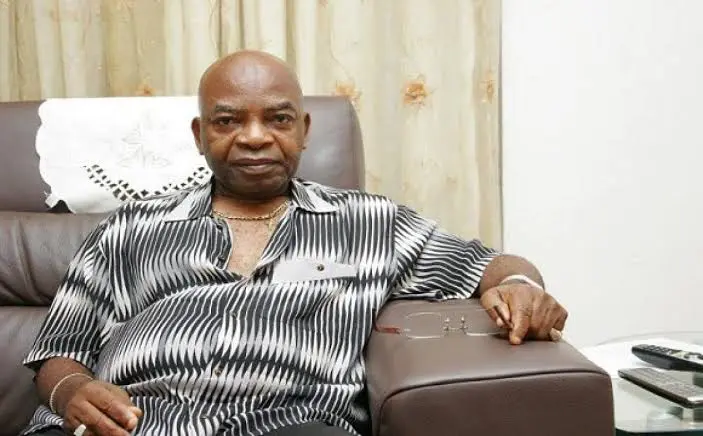
In a major regulatory crackdown, the Senegalese government has officially cancelled the offshore exploration rights of Atlas Oranto Petroleum, the oil firm owned by Nigerian billionaire Prince Arthur Eze. The move, confirmed in late January 2026, marks a significant shift in Senegal’s energy policy under the reformist administration of President Bassirou Diomaye Faye.
The revocation centers on the Cayar Offshore Shallow (COS) block, a 3,600-square-kilometer area north of the Dakar peninsula that has remained largely dormant for nearly two decades.
Why the License Was Cancelled
Senegal’s Ministry of Energy and Petroleum, led by Minister Birame Souleye Diop, cited a pattern of “repeated failures” by the company to meet its legal and financial obligations.
- Lack of Investment: Since the block was awarded in 2008, Atlas Oranto failed to drill a single exploratory well, despite several deadline extensions.
- Financial Default: The ministry revealed that the company failed to provide the mandatory bank guarantees required to prove it could fund its work program.
- Regulatory Cleanup: The withdrawal followed a technical and legal assessment that determined the company was “warehousing” the acreage for speculative purposes rather than active development.
The “Senegal vs. Liberia” Contrast
The timing of the revocation has sparked an international debate, as it coincides with Atlas Oranto’s expansion elsewhere.
- Senegal’s Stance: Dakar reclaimed the block to ensure that petroleum rights are “earned through performance,” not preserved by paperwork.
- The Liberia Deal: In sharp contrast, Liberia signed four production-sharing contracts (PSCs) with Atlas Oranto in September 2025 (Blocks LB-15, LB-16, LB-22, and LB-24).
- The Conflict: While Liberian authorities hope the $12M–$15M signature bonus will revive their dormant sector, critics in Monrovia have pointed to the Senegal expulsion as a warning sign of the firm’s track record of “inertia.”
Wider Implications for Arthur Eze
Prince Arthur Eze, often referred to as one of Africa’s wealthiest oil moguls, faces increasing scrutiny across his regional portfolio. While Atlas Oranto has successfully navigated extensions in countries like Uganda, the loss of the Senegalese block signals that West African governments are no longer tolerating inactive “legacy” contracts.
Senegal has since taken full control of the Cayar block and is expected to re-offer it in a future licensing round to partners capable of immediate drilling.


