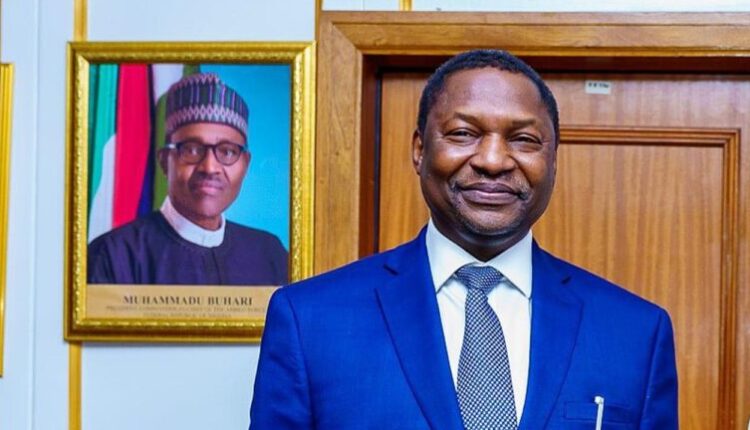
ABUJA, Nigeria — In what is being described as one of the most high-profile anti-corruption cases in Nigeria’s recent history, the Economic and Financial Crimes Commission (EFCC) has officially filed a 16-count charge of money laundering against former Attorney General of the Federation (AGF), Abubakar Malami, SAN.
The investigation has uncovered a staggering property portfolio valued at over N212 billion, allegedly acquired during Malami’s eight-year tenure (2015–2023).
The Three Pillars of the Probe
Investigators have linked the former AGF’s wealth to three major sources of public funds:
- The Paris Club Refunds: Malami is under fire for his role in deducting $418 million from state allocations to pay “consultants.” While he defended these payments as legal obligations, governors have long alleged he was acting in private interest.
- The Abacha Loot “Double Pay”: Despite legal fees being settled with foreign lawyers years ago, Malami allegedly approved fresh, multi-million dollar payments to local lawyers from recovered Abacha funds. Investigators allege a portion of these “recovery fees” was funneled back to him.
- The CBN Anchor Borrowers Scam: A specific trail led to a N4 billion loan taken under the Central Bank’s agricultural scheme in the name of one of Malami’s wives. The EFCC alleges the loan was never repaid and was instead diverted.
A Massive Property Empire
The EFCC has traced 41 high-value properties across Abuja, Kano, and Kebbi State. These include:
- Luxury Hotels: Including the Zeennoor Hotel in Kano (valued at N11.2bn) and the Meethaq Hotels in Abuja.
- Educational Institutions: Multiple campuses of Rayhaan University, with one site alone valued at N56 billion.
- Residential Palaces: Luxury duplexes in Maitama and Asokoro, and over 40 units of bungalows in Efab Estate, Abuja.
The Legal Battle Begins
Malami, who has been in EFCC custody since December 8, 2025, is set to be arraigned at the Federal High Court in Abuja alongside his son, Abdulaziz, and an associate.
Malami has fiercely denied all charges, labeling the probe as “political persecution” and a “trial by media.” His legal team insists that his wealth is legitimate and that he will vigorously defend his reputation in court.
“I am ready to account for my time in office,” a statement from his camp read. “But I will not be a victim of a coordinated attempt to silence me through baseless allegations.”
As the nation watches, this case stands as a massive test for Nigeria’s judiciary and its commitment to holding the highest-ranking public officials accountable.