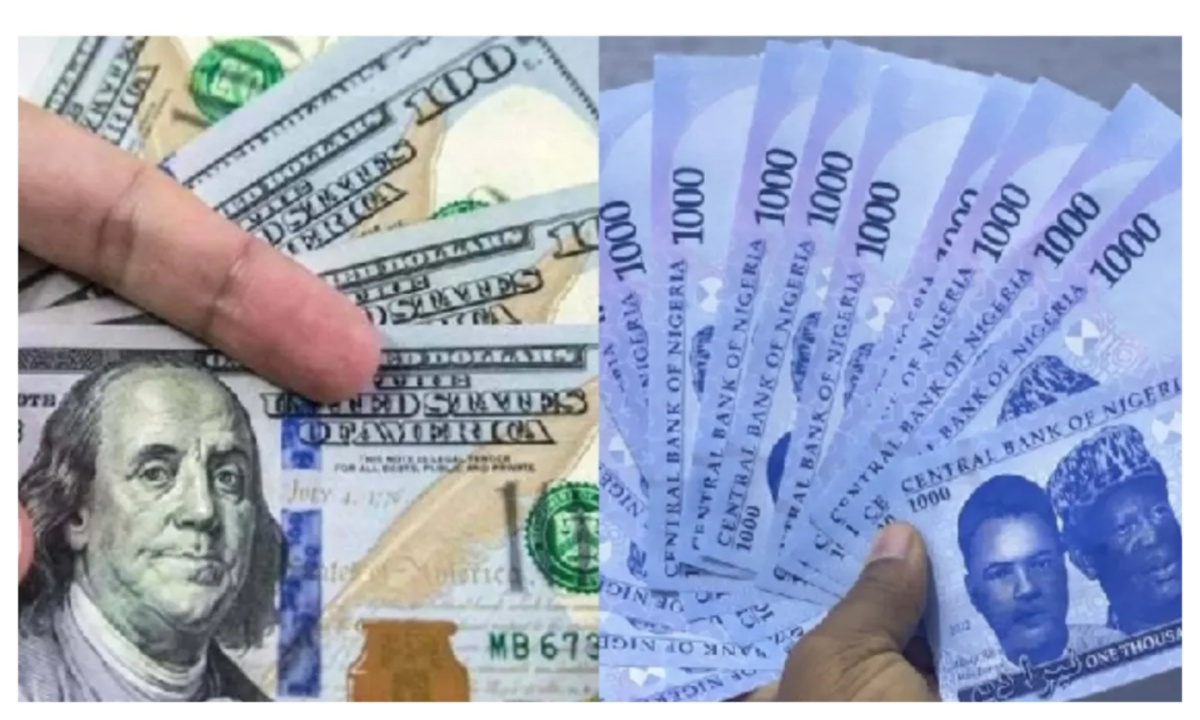
The Nigerian Naira recorded a marginal gain against the U.S. Dollar at the official window, reversing a brief dip seen at the start of the week. According to data from the Central Bank of Nigeria (CBN), the Naira appreciated to ₦1,419.35/$1 on Tuesday, January 20, 2026, representing a recovery of ₦0.93 from Monday’s closing rate of ₦1,420.28.
While the official market showed slight volatility, the black market remained resiliently stable, with the currency holding firm at ₦1,493/$1 for the second consecutive day.
The “Reserve” Factor
Financial analysts attribute the relative stability of the local currency to the consistent buildup of Nigeria’s External Reserves.
- The Surge: The reserves rose to $45.95 billion by Tuesday, January 19, 2026, up from $45.90 billion the previous Friday.
- The Outlook: In its latest Macroeconomic Outlook, the CBN projected that reserves could hit $51.04 billion by the end of 2026, driven by increased oil earnings and the expansion of the Dangote Refinery to 700,000 bpd.
FX Market Performance Snapshot
| Market Segment | Monday (Jan 19) | Tuesday (Jan 20) | Change |
| Official (NFEM) | ₦1,420.28 | ₦1,419.35 | +₦0.93 (Appreciation) |
| Black Market | ₦1,493.00 | ₦1,493.00 | 0.00 (Stable) |
What’s Driving the Stability?
Beyond the reserves, several factors are working in tandem to support the Naira in early 2026:
- Non-Oil Revenue: Non-oil collections now account for roughly 75% of government revenue, reducing the extreme “shocks” typically caused by oil price fluctuations.
- Reduced Import Pressure: The increased domestic refining capacity of petroleum products has significantly lowered the demand for foreign exchange previously used for fuel imports.
- Davos Diplomacy: Ongoing engagements by the Nigerian delegation at the World Economic Forum (WEF) in Davos are expected to boost investor confidence and potentially attract fresh Foreign Direct Investment (FDI).