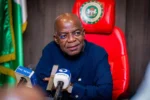
Senator Adams Oshiomhole, representing Edo North, has vigorously defended the administration of President Bola Tinubu, arguing that the government never promised “instant miracles” to Nigerians. Speaking on Channels Television’s Politics Today on Wednesday, January 21, 2026, the former APC National Chairman insisted that the administration’s “radical” reforms are necessary to fix deep-seated structural issues.
The “Radical” Pivot
Oshiomhole noted that after roughly 30 months in office, the administration is moving beyond surface-level fixes. He argued that the President is tackling problems that previous governments ignored for decades.
- Continuous Change: “In two and a half years of Bola Ahmed Tinubu, every day there is something changing,” Oshiomhole stated, pushing back against claims of stagnation.
- The Peter Obi Critique: Oshiomhole invoked a popular refrain used by Peter Obi—that one cannot keep doing the same thing and expect a different result. He argued that now that Tinubu is doing something “totally different” and “radically reforming,” critics are questioning why he is changing the system at all.
Support for the New 2026 Tax Policy
The Senator also used the platform to throw his weight behind the new tax laws that took effect on January 1, 2026.
- Progressive Shift: He described the policy as “progressive,” noting that it deliberately shifts the financial burden onto higher earners while providing exemptions for the poor and lower-middle-class workers.
- VAT Realities: Addressing the debate over Value Added Tax, Oshiomhole argued that VAT primarily impacts luxury and non-food items, suggesting that average workers need not fear the adjustments.
On Insecurity and 2027
Oshiomhole maintained that while challenges remain, significant progress has been made in security through better intelligence coordination under the Office of the National Security Adviser. Looking ahead to the 2027 General Election, he expressed confidence that the opposition—specifically the LP and PDP—would struggle to defeat the APC due to the “visible substance” of Tinubu’s long-term policies.