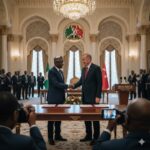
ABUJA, NIGERIA — In a major step toward deepening European-African ties, the Minister of State for Foreign Affairs, Amb. Bianca Odumegwu-Ojukwu, hosted the Italian Ambassador to Nigeria, Roberto Mengoni, for a high-level strategic meeting in Abuja on Monday, January 26, 2026.
The meeting focused on transitioning from decades of casual friendship to a structured, results-oriented partnership under the “Renewed Hope” diplomatic agenda.
1. A Historic First: The Nigeria-Italy Bi-National Commission
Despite over 60 years of diplomatic relations, the two nations have never operated under a formal Bi-National Commission. Amb. Odumegwu-Ojukwu officially called for the establishment of this framework to:
- Streamline Trade: Remove bureaucratic bottlenecks for Nigerian agricultural and manufactured goods entering the Italian market.
- Ease Mobility: Improve the efficiency of visa issuance to support business, education, and cultural exchange.
- Structured Dialogue: Provide a permanent platform for regular consultations on climate action and regional security.
2. “Smart Migration” and Vocational Pathways
Addressing the complex issue of migration, both leaders agreed to move beyond simple border control toward a “Smart Migration” model.
- Combating Trafficking: A commitment to intensifying joint operations to dismantle human trafficking networks and transnational crimes.
- Legal Alternatives: Italy reaffirmed its interest in creating vocational training and small business development initiatives within Nigeria. This aims to empower the youth in high-migration regions, providing them with legal pathways to employment both locally and in Europe.
- Italy’s 2026 Quota: The meeting touched on Italy’s newly released 2026 Flow Decree, which opens specific work permits for non-EU nationals in sectors like agriculture and manufacturing.
3. Agribusiness and Renewable Energy Support
Ambassador Mengoni described Nigeria as “central” to Italy’s Africa cooperation strategy. As part of Italy’s broader industrial support, the following sectors were identified for immediate technical collaboration:
- Industrialization: Italy will provide technical expertise to help Nigeria modernize its agribusiness value chains.
- Energy Transition: Joint efforts in renewable energy infrastructure to support Nigeria’s green economy goals.
- Food Security: Leveraging Italian technology to improve crop yields and reduce post-harvest losses in Nigeria.